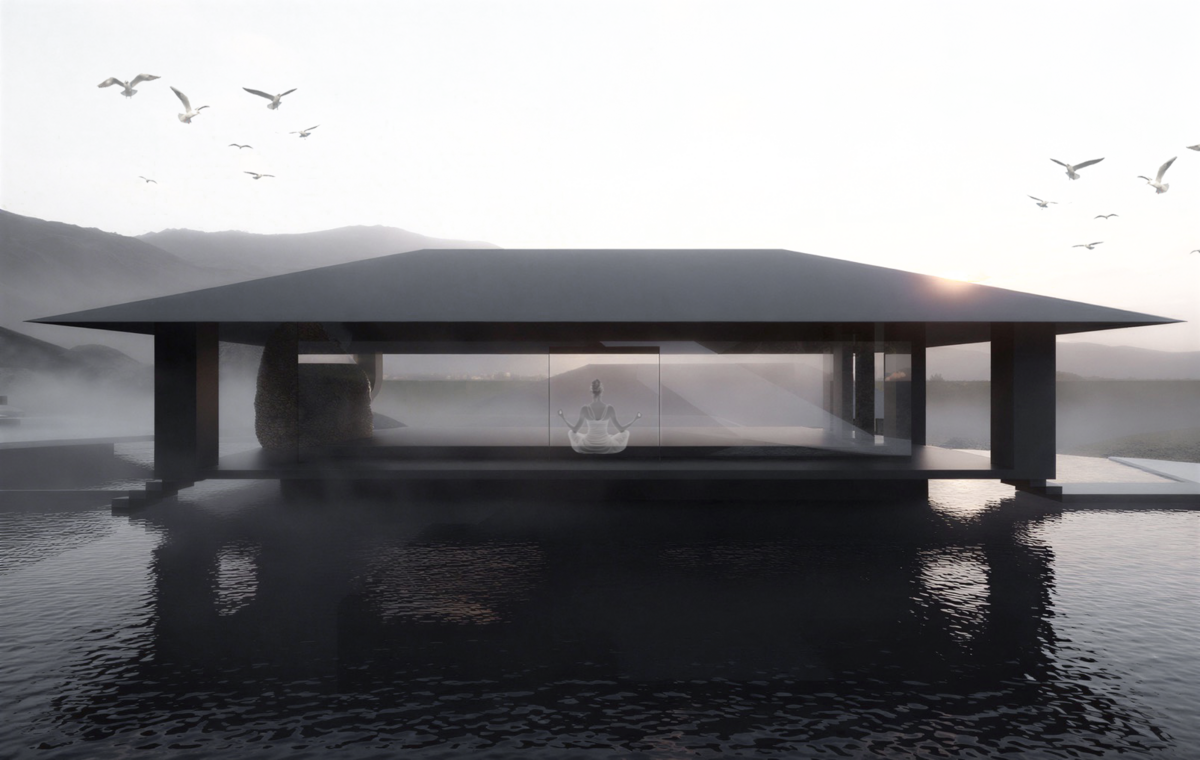
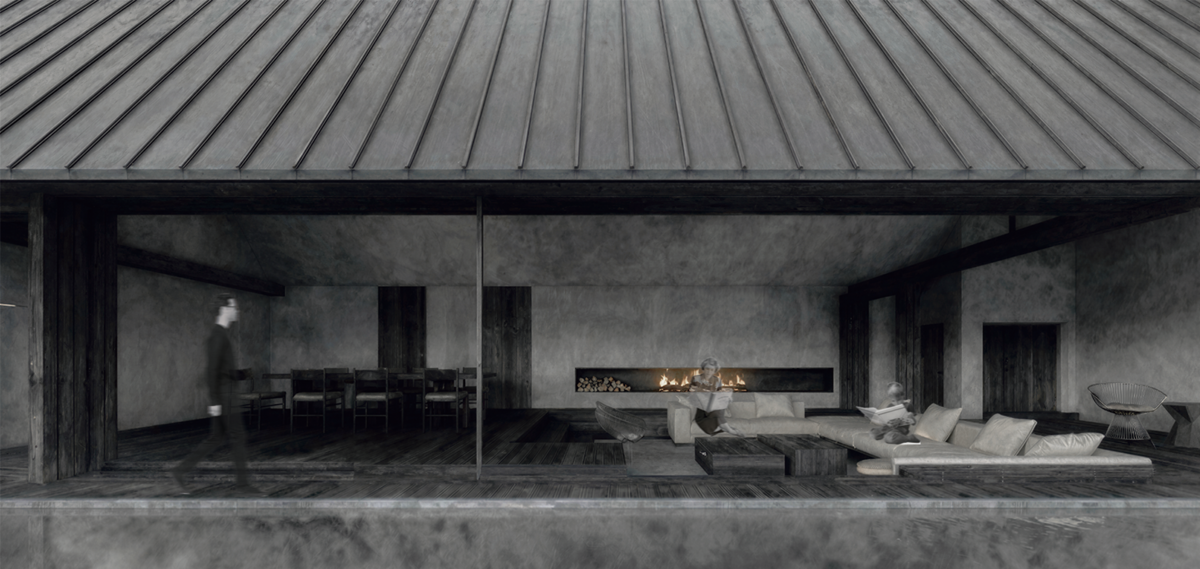
“HILL&HOUR” is an architectural experiment about perceiving time. In contemporary life, where rhythms are highly compressed and the sense of time has become increasingly flattened, we design a series of fields shaped by nature and space. Walking, pausing, light and shadow, humidity, and sound become ways of seeing time again. People no longer pass through space in haste, but slow down within the mist, linger in the sound of rain, and reflect within the light. Time is no longer merely the measure of a clock, but a sequence of moments that can be experienced. Here, people and time meet again.
it/IT
Department of Interaction Design, National Taipei University of Technology, Taipei Tech
This project explores bodily autonomy and the fragmentation of subjectivity. By separating perception and action from a unified body, the work presents mechanical parts as independent entities, questioning whether a subject can still exist after the body is divided.
Through cameras and sensing systems, the installation captures visitors’ gestures and movement data. Artificial intelligence analyzes highly repeated gesture patterns, learns from them, and generates mechanical feedback such as delay, deviation, or imitation. These unsynchronized responses blur the relationship between control and reaction, making viewers question whether they are controlling the machine, or being observed and answered by another form of agency.
Combining interaction design, mechanical installation, artificial intelligence, and immersive exhibition, the work creates an experimental space between body, machine, and intelligent system.
We have received your opinions, and will get back to you as soon as possible!