Select Main Body Text
:::

Loma' Ci Dadaya

Dept. of Interior Design Chung Yuan Christian University, Chung Yuan Christian University

形象圖

四點設計 Contact to Loma' Ci Dadaya for cooperation

500

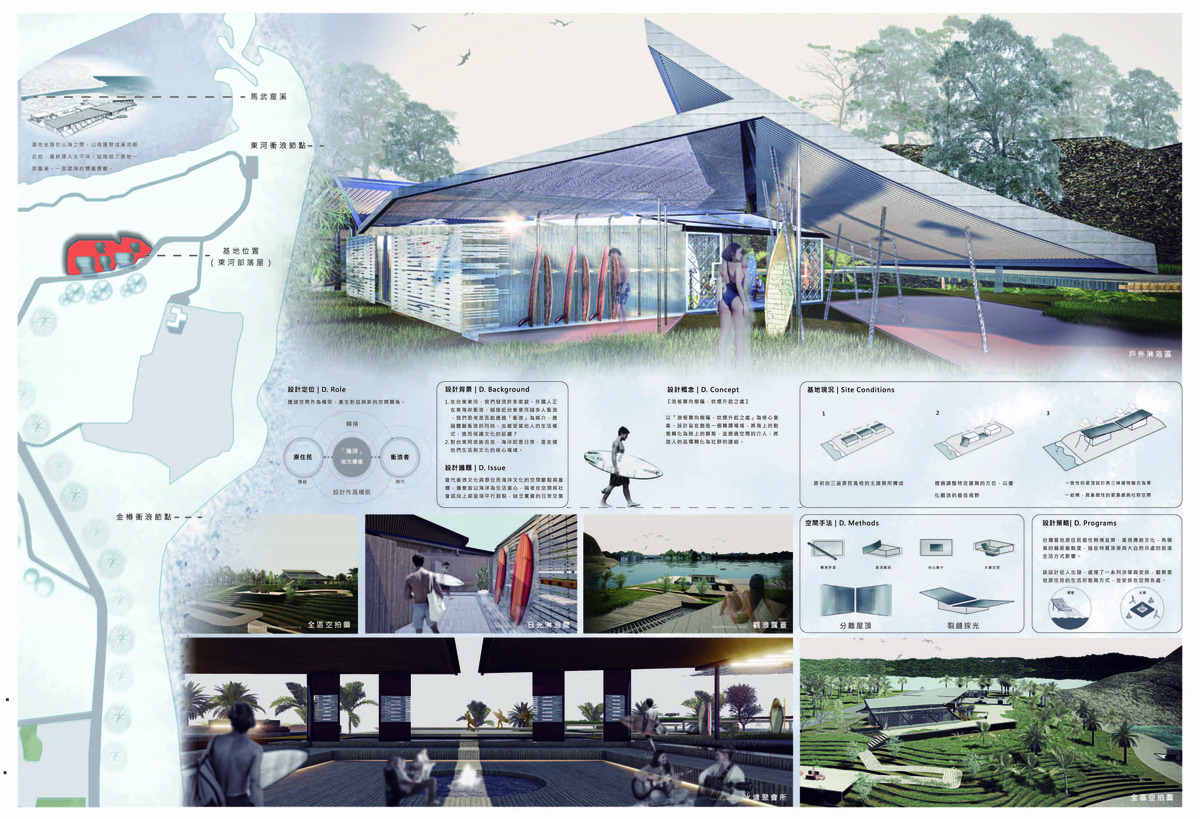
Centered around the core theme of "The Surfers' Tribe," this design responds to Taitung's ocean-based regional values. The ocean here is not merely a scenery to be observed, but an existence that must be personally experienced through the body and senses. For both surfers and the Amis people, the sea is an integral part of life and culture. This project attempts to reconstruct the relationship between humanity and the sea—bringing the ocean closer to the land, and drawing people closer to the sea.

The design responds to surfers' needs for freedom, fluidity, and communal interaction, while also integrating the daily life and ritualistic spirit of the Amis culture, translating them into spatial vocabulary and site atmosphere. Here, the tribe is no longer just a traditional form, but a new cultural vehicle—a settlement belonging to surfers, and a place that bears ocean memories and bodily experiences.

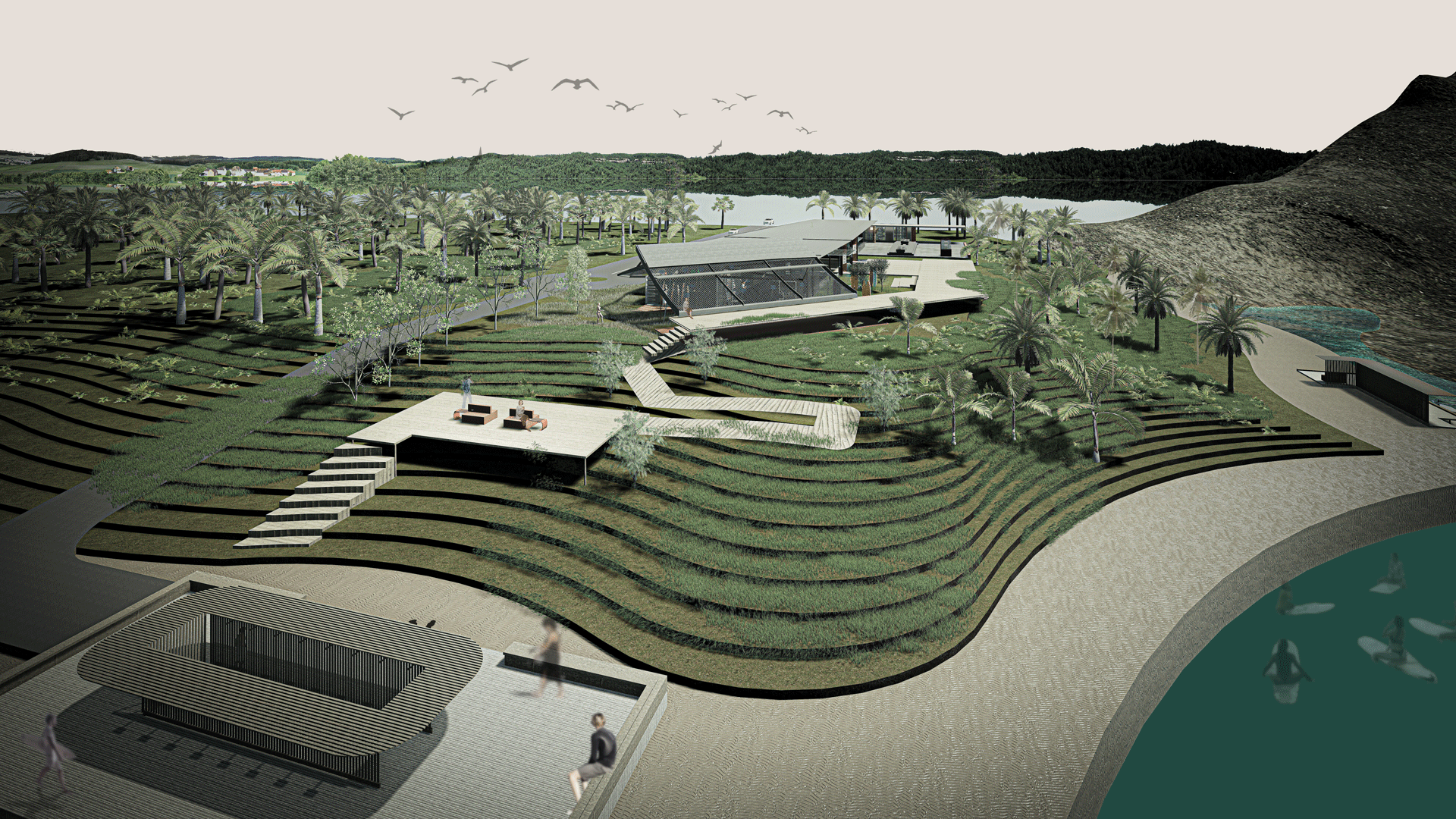
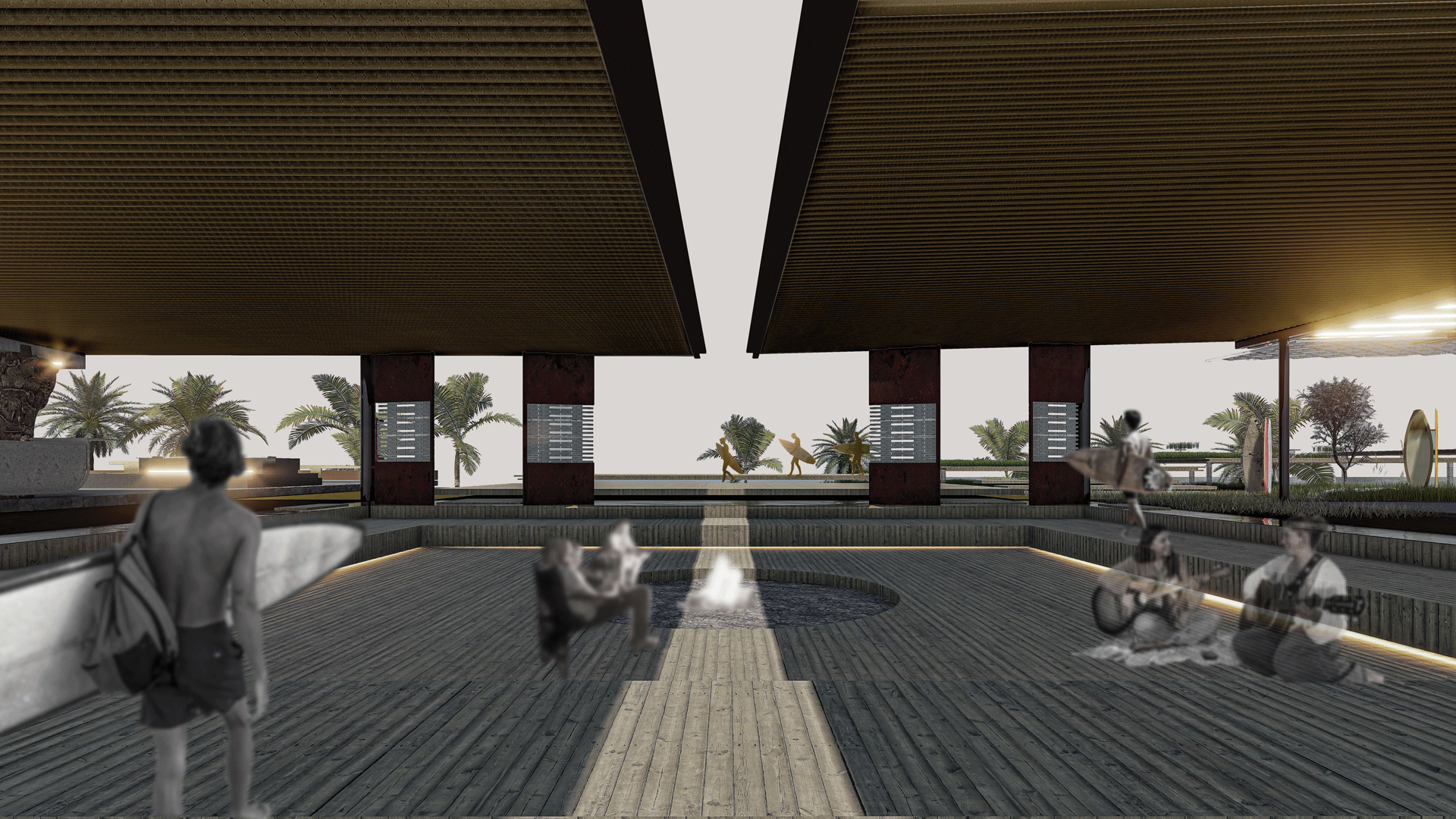
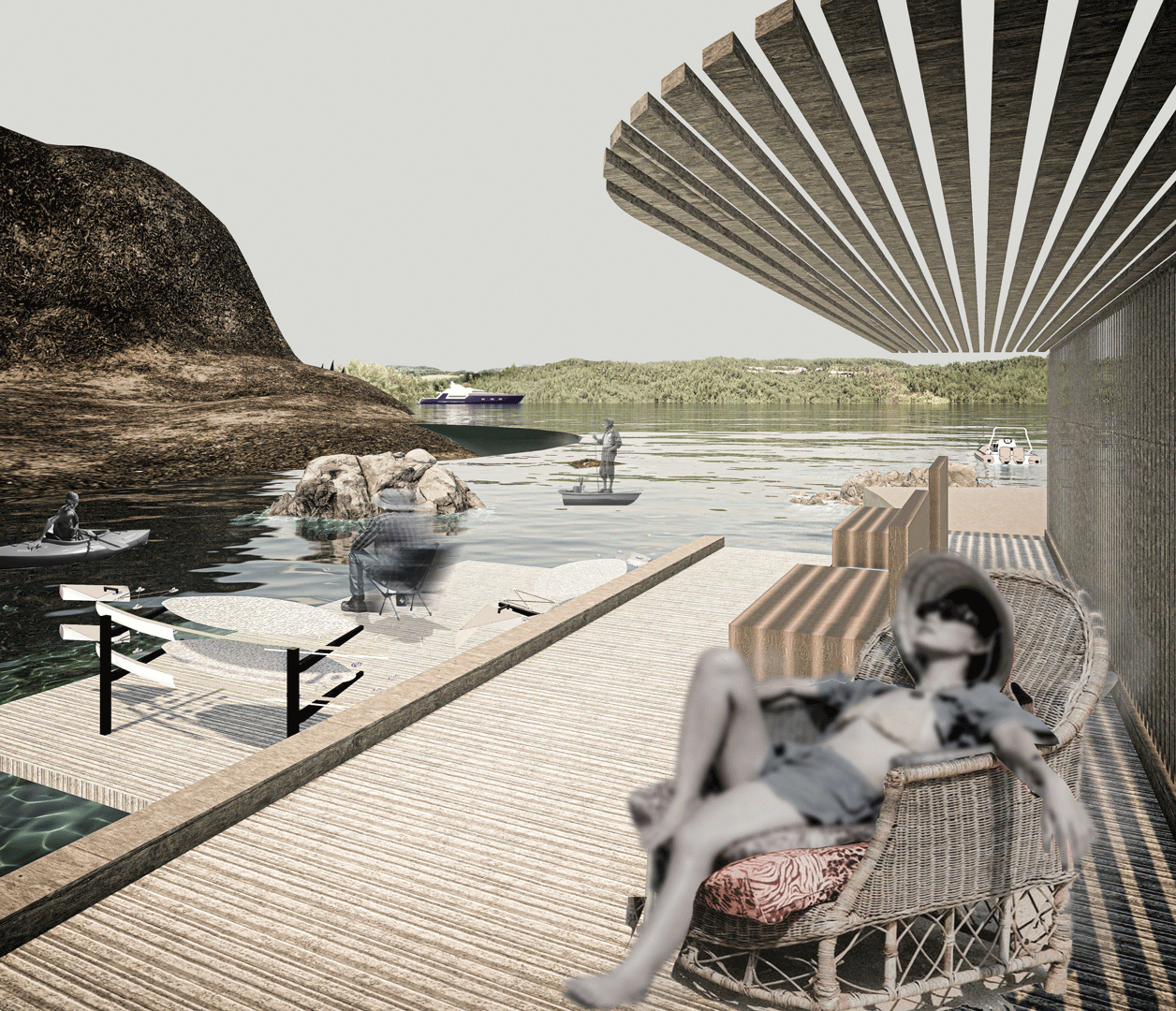
Upon returning from the waves, water filters through a geometric grid canopy, offering surfers a pristine washing experience nestled deep in the forest and secluded by bamboo groves. Integrating more wave-watching platforms to bring the rhythm of the tides closer to the shore. Evoking the spirit of the traditional Amis fire relationship, this gathering space draws people inward under one shared roof—flexibly blending cultural rituals, live performances. Accommodating the unique habit of surfers washing alongside their boards, dual-rinse stations are specifically integrated. Natural light is introduced through a rooftop aperture. Preserving and optimizing existing coastal facilities to create a shared platform for the local community’s daily SUP (stand-up paddleboarding) and fishing activities. By pivoting the architectural axis to overcome the site's original orientation limits, the dynamic movement of the ocean is framed directly from the terrace.

EcoHelix

Department of Industrial Design, Chaoyang University of Technology

This project is a self-powered environmental monitoring system that integrates small-scale wind and solar energy. It is designed for outdoor and remote areas to continuously collect data such as temperature, humidity, air quality, wind speed, and visual information, while reducing dependence on external power sources. The system incorporates edge computing capabilities, enabling real-time data filtering, anomaly detection, and preliminary analysis on-site. Only valuable data is transmitted to the cloud, which helps reduce bandwidth usage and improve response efficiency. The goal is to develop a low-power, scalable, and intelligent distributed monitoring network. It can be applied to disaster prevention, agricultural monitoring, energy management, and smart city systems, enhancing decision-making efficiency while lowering operational costs.

back to top