Select Main Body Text
:::

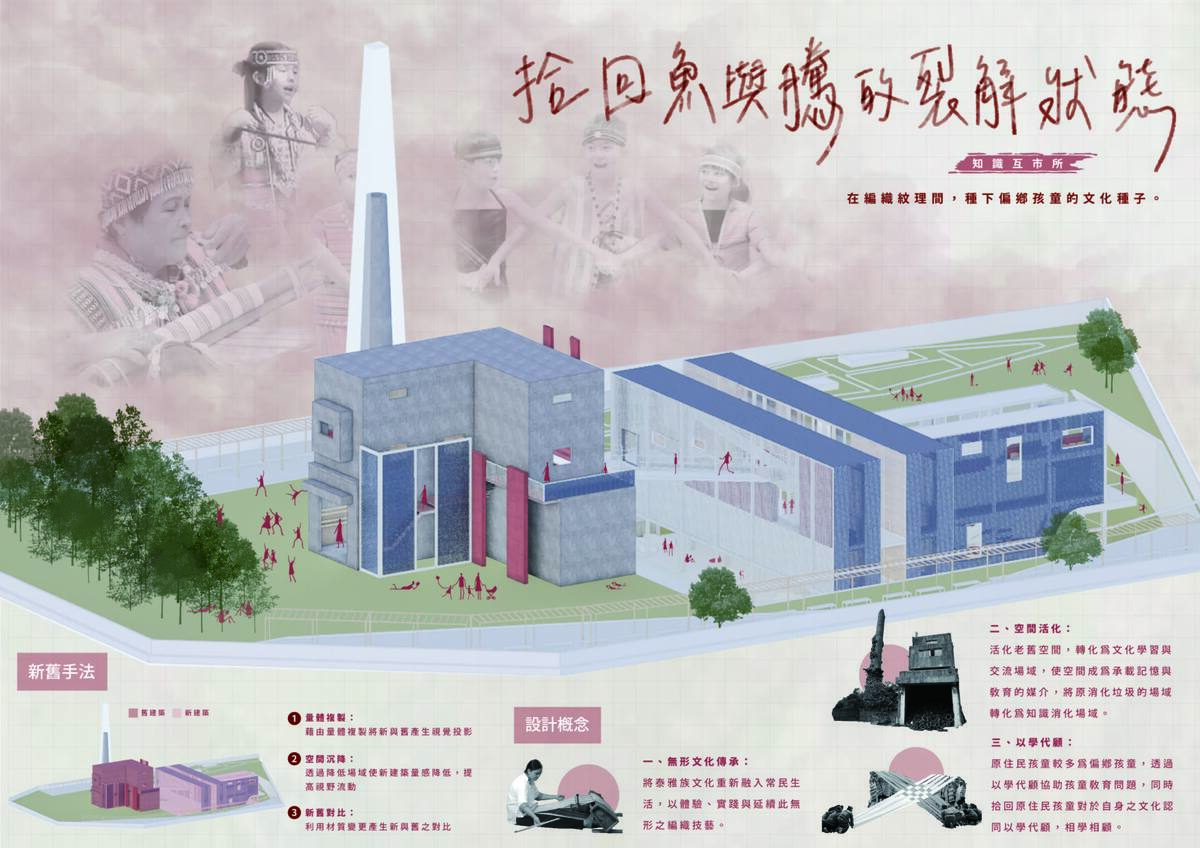
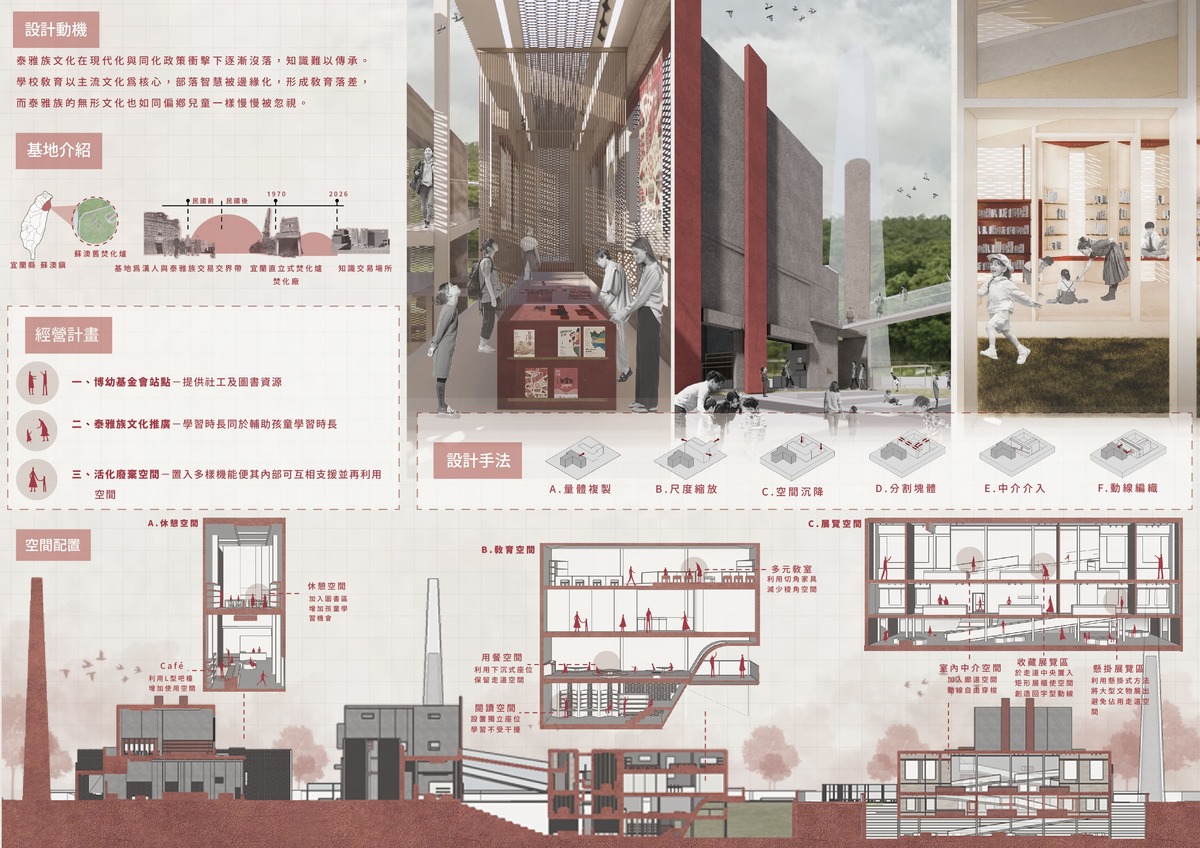
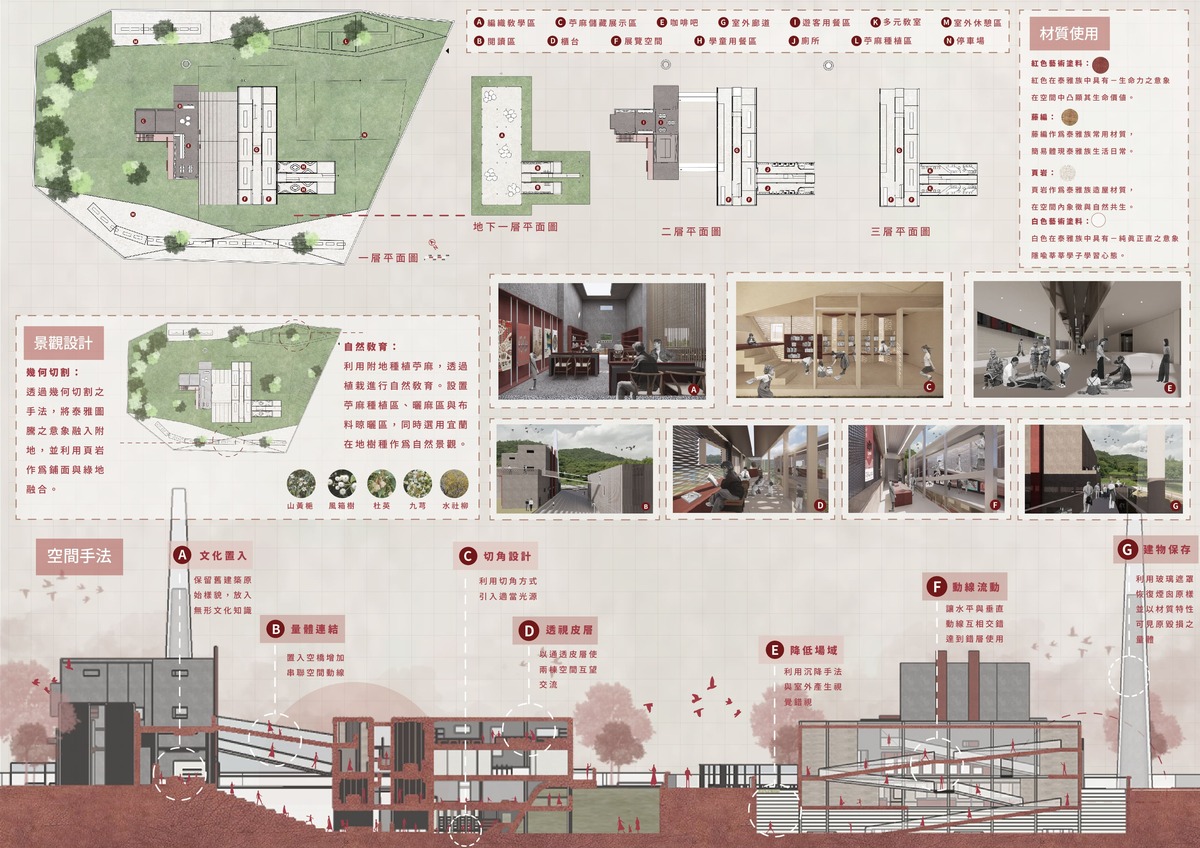
Recovering the fragmented state of Atayal culture - the Knowledge Mutual Market

Department of Interior Design, Tainan University of Technology

形象圖

四點設計 Contact to Recovering the fragmented state of Atayal culture - the Knowledge Mutual Market for cooperation

500

The invisible culture of the Atayal people is gradually disappearing, tribal wisdom is marginalized, and traditional languages, weaving skills, and life knowledge are facing rupture and loss. The design takes the reuse of idle incinerators as an opportunity to transform them into symbols of consumption and ending, becoming a field that carries cultural memory and educational regeneration. Through space co-learning and learning to take care of each other, we promote intergenerational exchanges and enable the natural transmission of cultural experience. and uses Atayal weave texture to translate the space, shaping the intertwined and penetrating field relationship, making education a process of cultural regeneration, so that life wisdom and cultural memory can continue to grow.

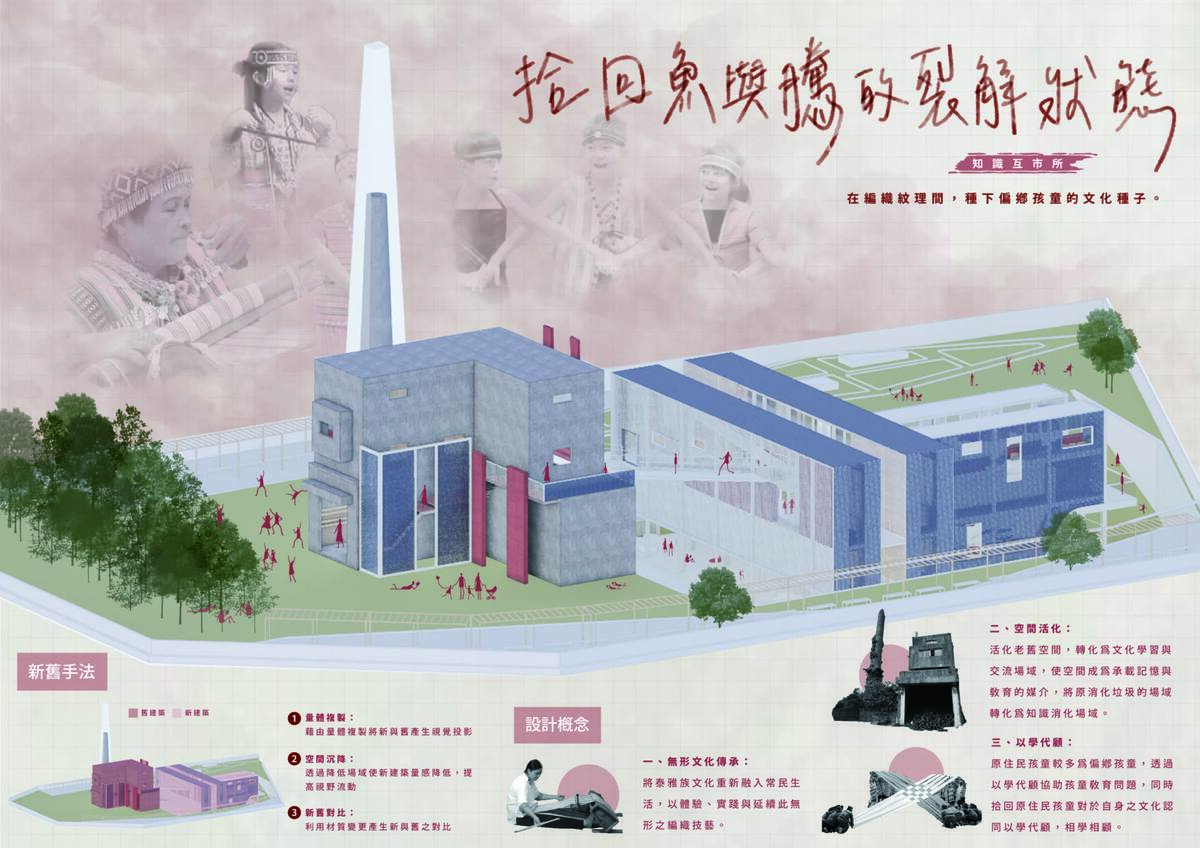
The regeneration of the incinerator carries the memory of Atayal culture and the continuation of education and co-learning The regeneration of the incinerator carries the memory of Atayal culture and the continuation of education and co-learning The regeneration of the incinerator carries the memory of Atayal culture and the continuation of education and co-learning The regeneration of the incinerator carries the memory of Atayal culture and the continuation of education and co-learning

Piecing time

Department of Cultural Creativity and Digital Media Design, Lunghwa University of Science and Technology

This work condenses Taiwan’s overlapping historical eras into the physical experience of contemporary furniture. The design deliberately pairs contrasting woods and structures to metaphorically represent the 'friction and wearing-in' of history: the rugged, irregular wood blocks at the base symbolize the exploration of the Dutch and Spanish periods; the standardized maple in the midsection echoes the craft order of Qing-dynasty Taiwan; and the cypress and curved lines at the top embody the modern silhouettes influenced by the Japanese colonial period. By deconstructing and reassembling these different historical design languages, the grand narrative of the island's history is translated into a 'tactile philosophy' of touch and seating, achieving a harmonious symbiosis and transformation of diverse cultures within a modern form.

back to top