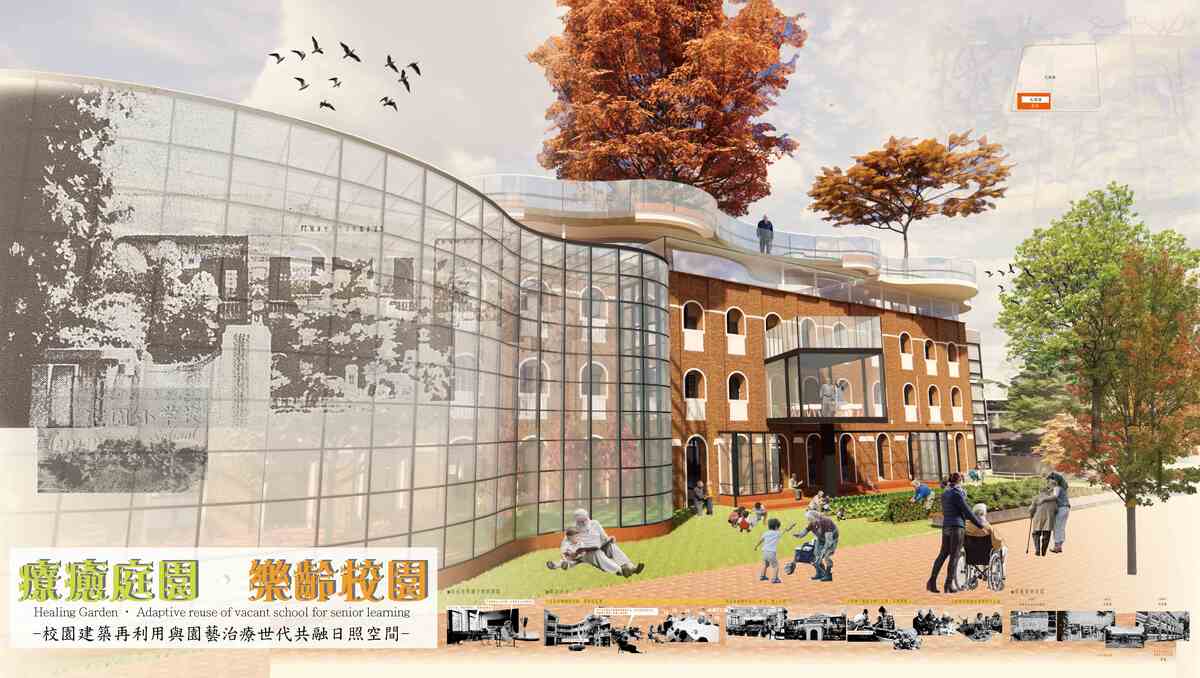
Healing Garden • Adaptive reuse of vacant school for senior learning
Department of Interior Design, Tainan University of Technology


四點設計 Contact to Healing Garden • Adaptive reuse of vacant school for senior learning for cooperation

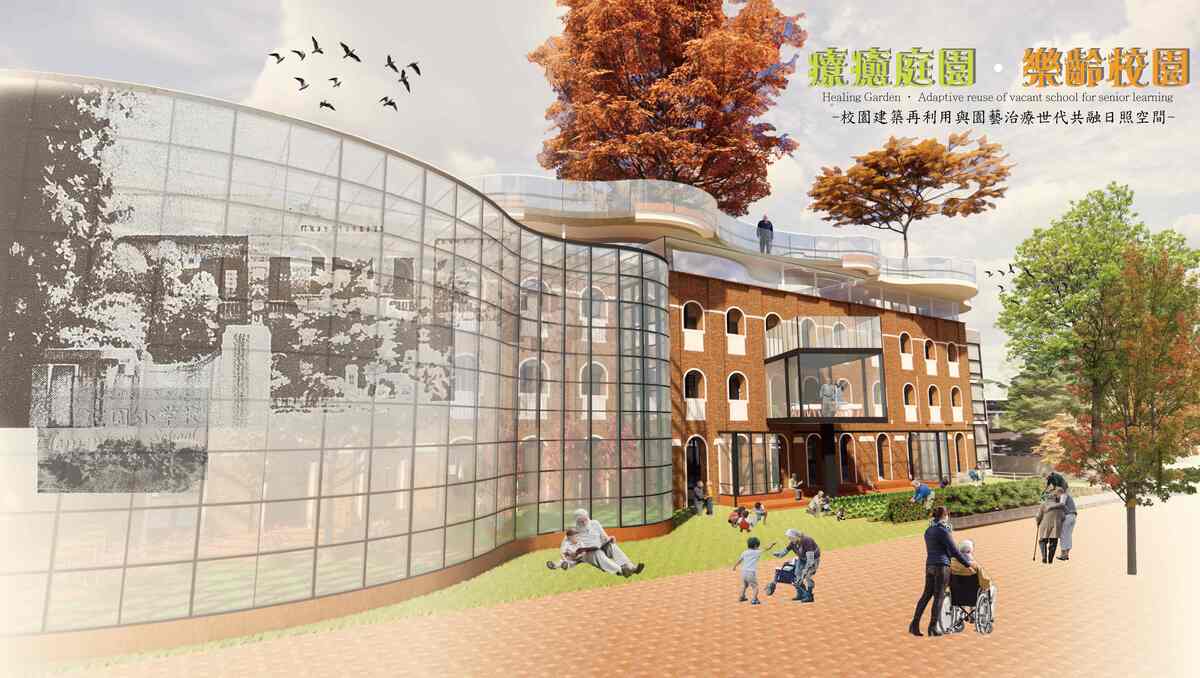
To reduce older adults’ resistance to unfamiliar day-care environments, this design adaptive reuses the familiar vacant campus, evoking memories across time and allowing seniors to naturally integrate into a new living setting. By incorporating the campus’s rich vegetation resources, the project introduces horticultural therapy, connecting greenery between indoor and outdoor spaces to create an environment that integrates nature, learning, and social interaction, all guided by the needs of older adults.
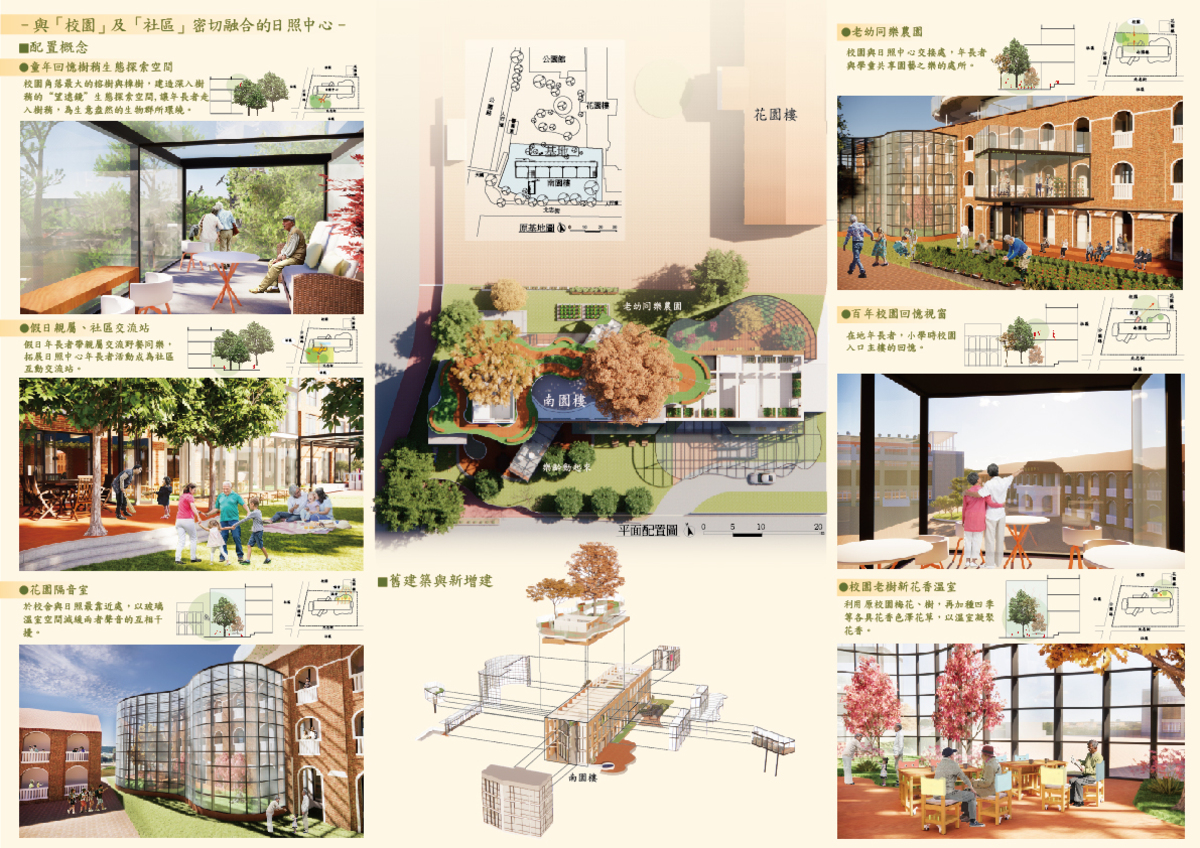
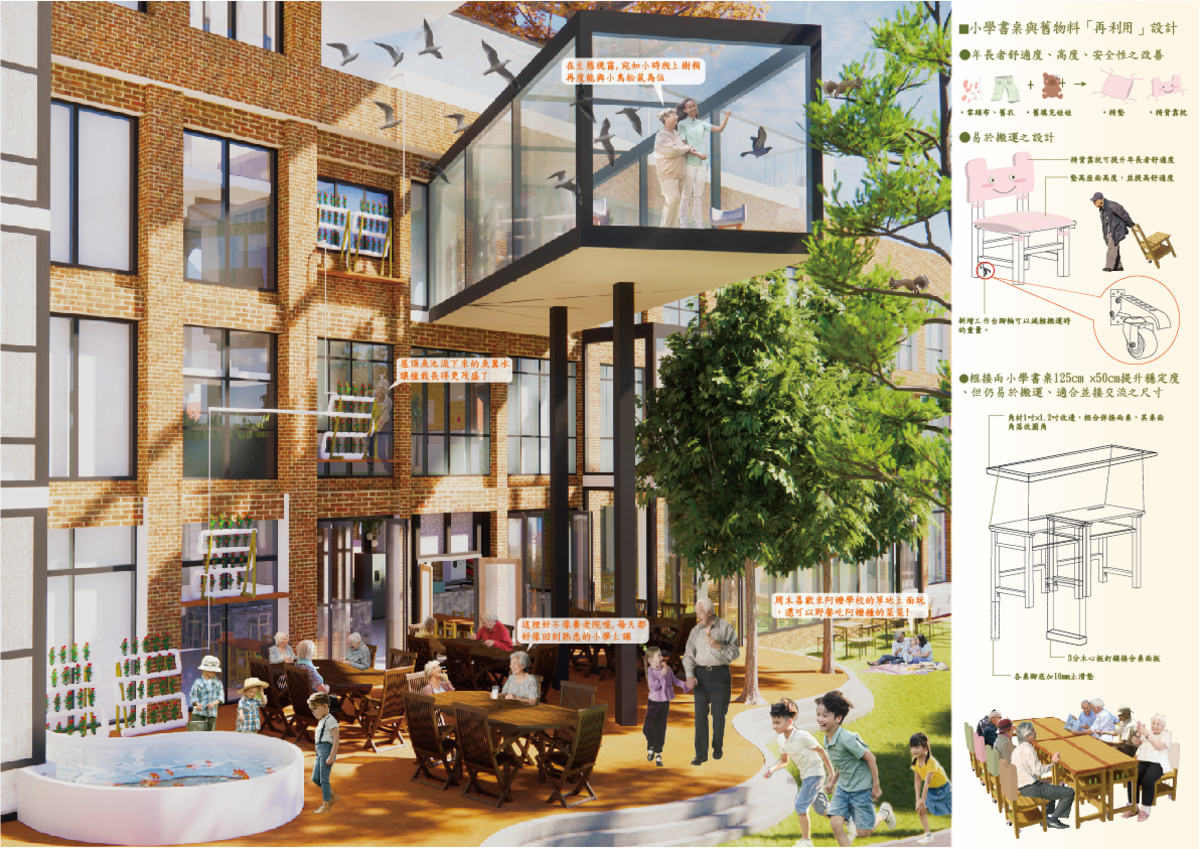
Centered on the former South Garden Building, the design extends an “Ecological Exploration Space” into the canopy of the campus’s largest banyan tree on the southern side, allowing seniors to relive childhood memories of climbing trees and observing nature. Along the southern boundary adjoining the community, an outdoor lawn connects to an open indoor kitchen and dining area, forming a “Weekend Family Picnic and Social Space.” To the northeast, near the existing school buildings, a garden greenhouse blocks the cold winter winds while also serving as a “Sound-Insulated Floral Garden Room.” Existing plum trees are preserved and complemented with fragrant, seasonal flowering plants to create a space where floral scents are concentrated within the greenhouse.
On the northwest side, adjacent to the campus, an “Intergenerational Garden Farm” is created, where older adults and children can share the joy of gardening. Facing the main school building, a “Memory Window” space frames views toward the historic campus garden building, reinforcing visual and emotional connections to the past.
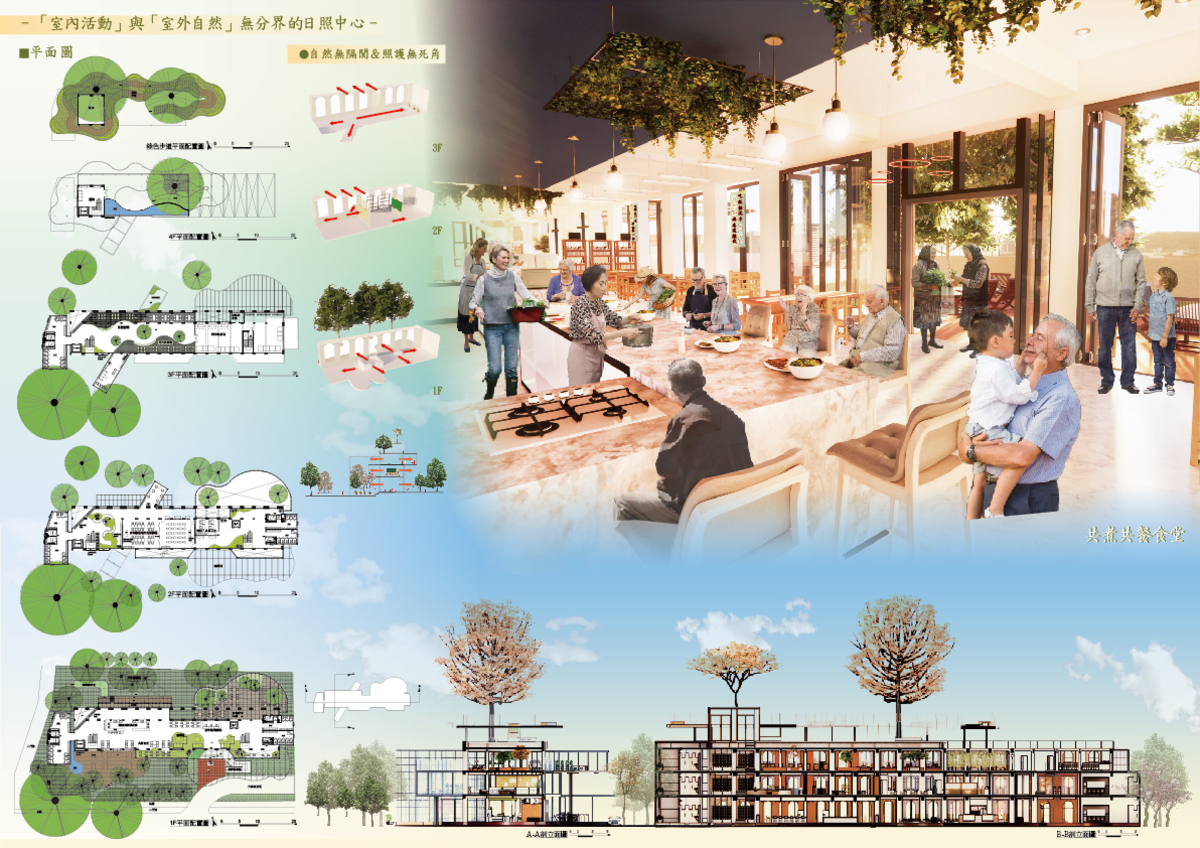
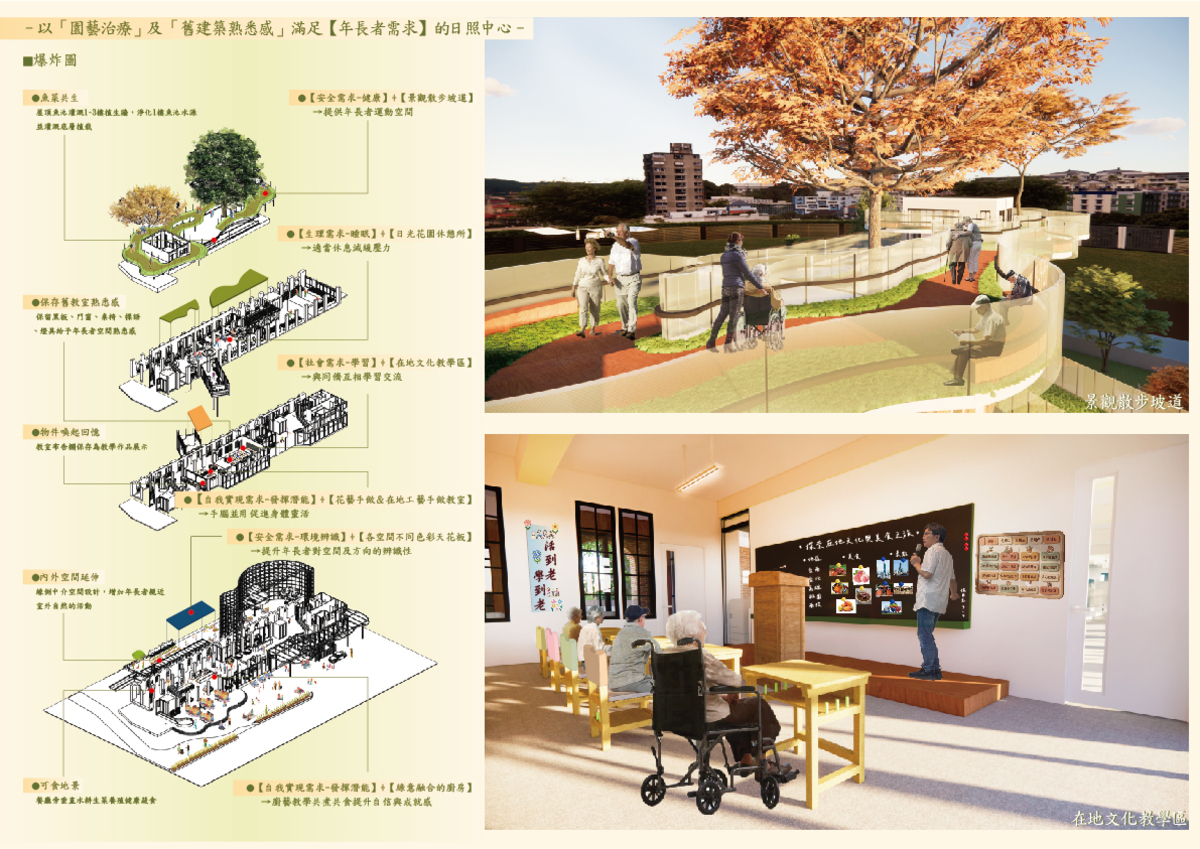
Each floor’s interior layout is organized around a “central hub” concept, with radial and open spatial arrangements. This design not only ensures ample natural light and a close connection to nature, but also allows caregivers to monitor seniors’ activities without blind spots, enhancing safety. Facilities include a teaching kitchen and communal dining space for shared cooking and meals, promoting self-fulfillment and social engagement; preserved classroom spaces adapted into local craft studios; as well as resting areas and circular walking paths for daily exercise.
Altogether, the project realizes a day-care center that balances health, safety, learning, memory, and emotional connection.