Select Main Body Text
:::

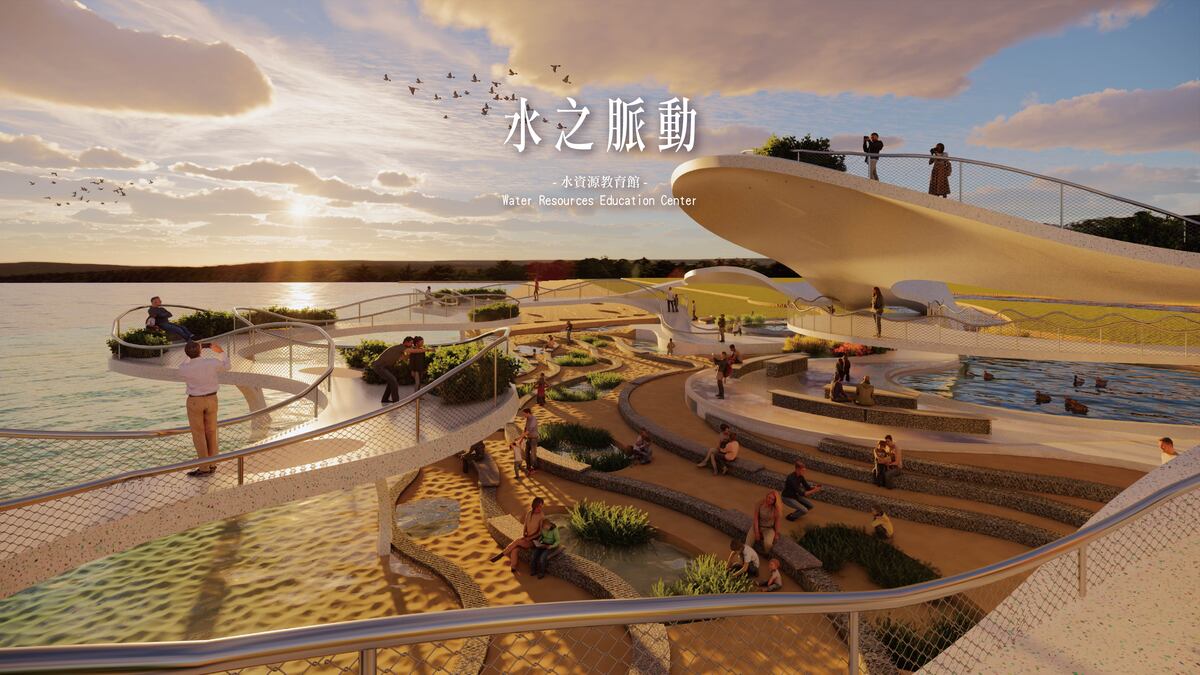
Pulse of Water

Department of Interior Design, Tainan University of Technology

形象圖

四點設計 Contact to Pulse of Water for cooperation

500

In recent years, extreme climate phenomena have intensified worldwide, with frequent occurrences of heavy rainfall and droughts leading to increasingly uneven distribution of water resources. In Taiwan, despite abundant rainfall, the island’s steep terrain and environmental constraints make it difficult to effectively retain rainwater. Coupled with serious water pollution issues, the amount of usable freshwater remains relatively limited. On the other hand, Taiwan is surrounded by the ocean, possessing rich biodiversity and diverse marine ecosystems. Tidal movements also contain considerable potential as natural resources, awaiting further development.
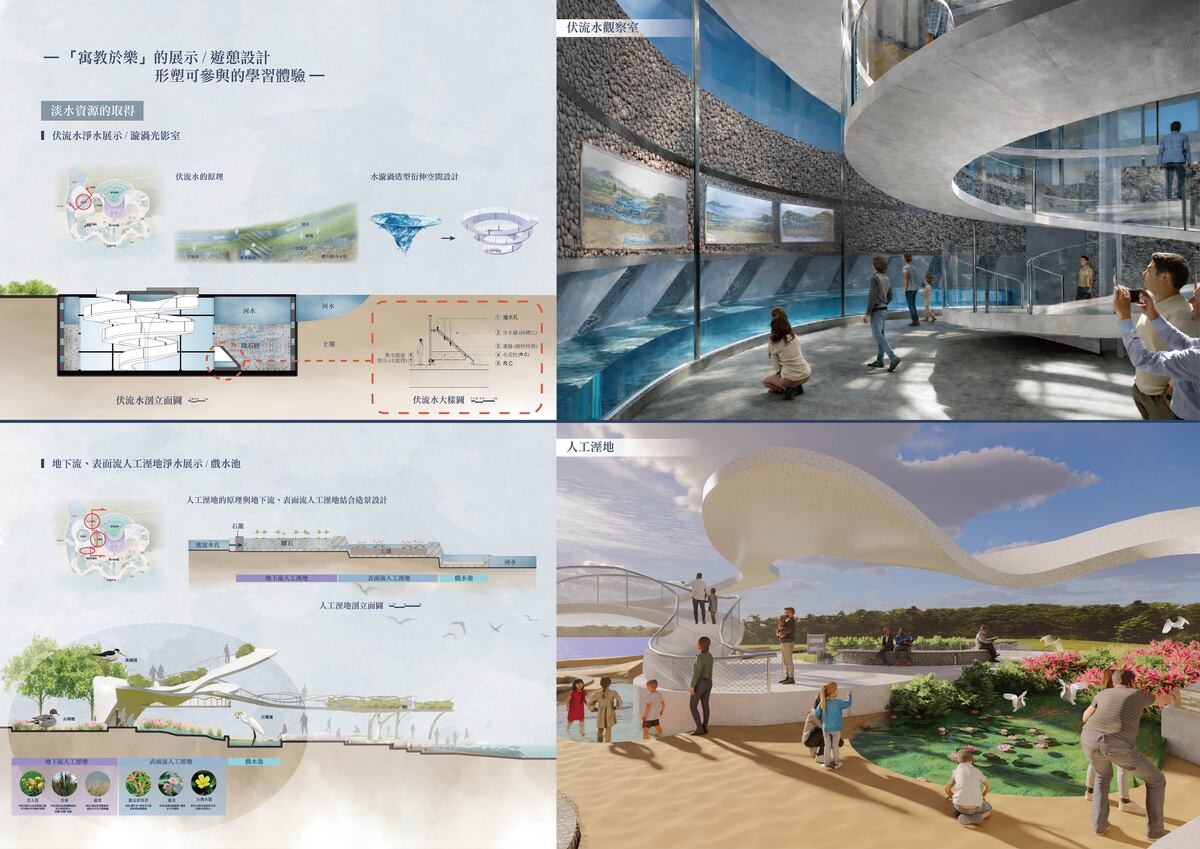
Against this background, the project site is located in Taijiang National Park, at the estuary of the Yanshui River where it meets the sea. The design aims to transform knowledge related to the purification, circulation, and collection of freshwater, as well as the rich ecology nurtured by seawater and the potential applications of tidal resources, into a space that can be seen, experienced, and actively engaged with. At the same time, it emphasizes an “edutainment” design approach, allowing people to learn about water resources through various forms of interaction with water, such as playing in water, engaging with waterfront spaces, viewing the scenery, and resting.
Furthermore, different forms and characteristics of water are integrated into the architectural design, enabling the building to harmonize with its surrounding aquatic environment. It is hoped that this “Water Resource Education Center” will provide a pleasant and fluid spatial experience, allowing visitors to learn essential knowledge about water resources in an enjoyable and immersive way.

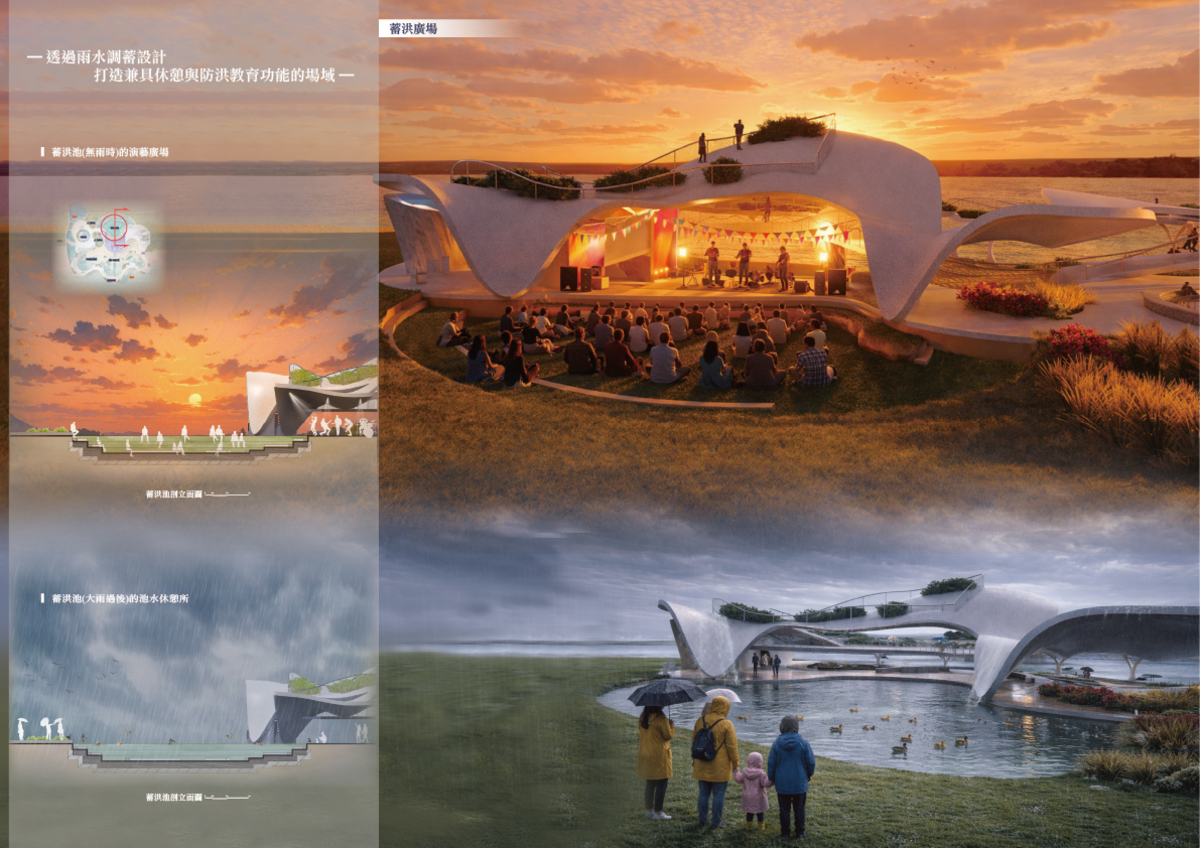
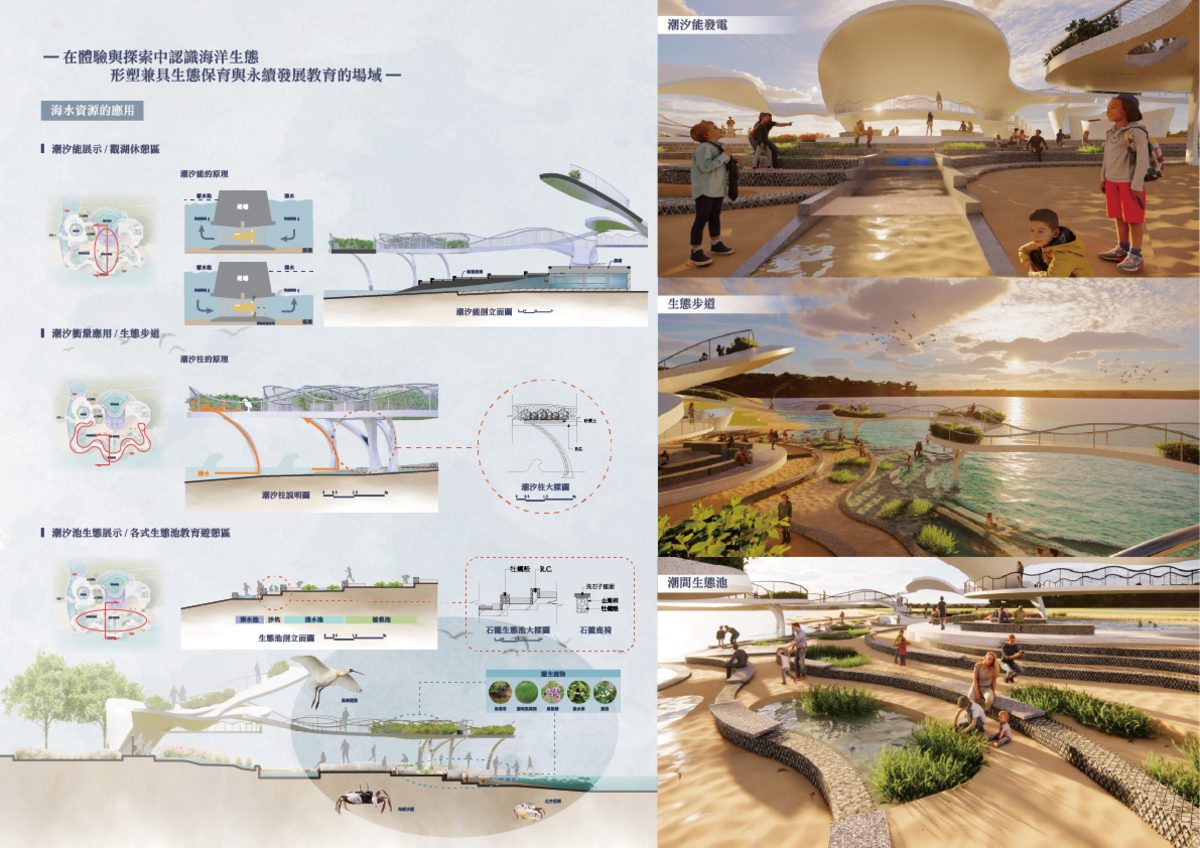
Transforming the purification and circulation of freshwater, along with the resource utilization of seawater, into an observable architectural experience. At the confluence of river and sea, responding to and integrating with the natural landscape. Exhibition and recreational design that embodies “edutainment,” shaping an interactive and participatory learning experience. Through rainwater detention design, creating a space that integrates recreational use with flood prevention education. Through experience and exploration, understanding marine ecosystems while shaping a space that integrates ecological conservation and sustainable development education.

What the fox say?

Department of Industrial Design, Ming Chi University of Technology

"What the fox say?" is a scenario-based board game designed with anti-fraud education at its core, targeting mainly middle and high school students aged 12 to 18. Although teenagers today frequently encounter anti-fraud campaigns, these lessons often remain at the knowledge level, making it difficult to translate what they have learned into practical actions when faced with monetary temptations or peer pressure. This work uses gamified learning to transform common fraud scenarios into question cards, allowing players to develop the ability to recognize fraudulent tactics through interaction and decision-making. In the game, players become foxes competing for berries, symbolizing assets, in a forest full of unknown temptations, while also needing to judge the authenticity of information and make betting decisions. The outer box is shaped like a UFO to symbolize fraud as a sudden, mysterious temptation, while the fox characters display various expressions representing different psychological states people experience when facing fraud. Through strategy, judgment, and interactive mechanisms, the game allows players to understand fraud tactics in a fun and engaging way, ultimately enhancing alertness and self-protection skills.

back to top